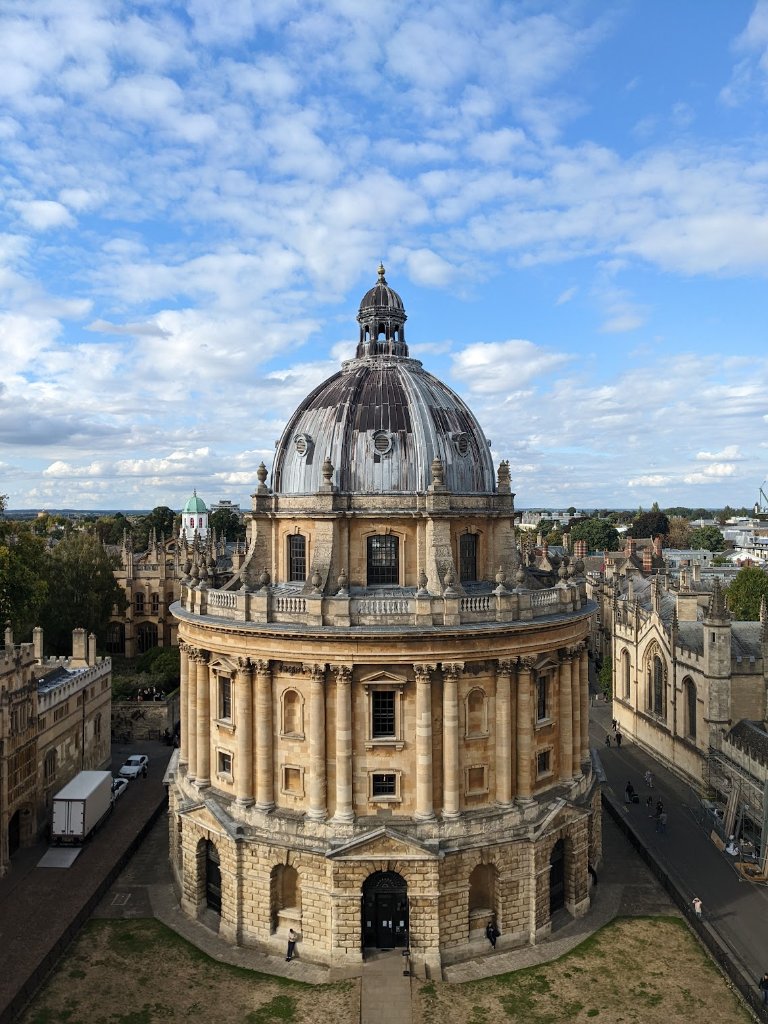
Oxford Reformation Tours
From Wycliffe to Lewis—self-guided tours of Oxford's Protestant heritage
27 sites

Martyrs' Memorial
The Martyrs' Memorial stands at the junction of St Giles', Magdalen Street, and Beaumont Street — a towering Gothic spire designed by Sir George Gilbert Scott and erected between 1841 and 1843. It commemorates three Protestant bishops — Thomas Cranmer (Archbishop of Canterbury), Hugh Latimer (Bishop of Worcester), and Nicholas Ridley (Bishop of London) — who were burned at the stake during the reign of Queen Mary I for refusing to recant their Protestant faith. The memorial was itself a product of controversy: it was commissioned by evangelical Anglicans partly as a rebuke to the Oxford Movement, which they feared was leading the Church of England back toward Rome. The design deliberately echoes the Eleanor Crosses of medieval England, standing as a permanent witness to the cost of conscience. Statues of all three martyrs occupy niches in the memorial, with Cranmer facing south toward the city, holding a Bible.

Broad Street Execution Site
A cross of different-coloured cobblestones is set into the road surface in front of Balliol College on Broad Street, marking the traditional spot where the three Oxford Martyrs were burned at the stake. In the 1550s, this area lay just outside the medieval city walls, in the town ditch — a deliberately public place of execution. On 16 October 1555, Hugh Latimer and Nicholas Ridley were burned here together. Latimer's last words to Ridley have echoed through centuries of Protestant memory: "Be of good comfort, Master Ridley, and play the man. We shall this day light such a candle, by God's grace, in England, as I trust shall never be put out." Five months later, on 21 March 1556, Thomas Cranmer was led from the Bocardo Prison to the same spot. Having been pressured into signing recantations, he dramatically withdrew them at the last moment, thrusting his right hand — the hand that had signed — into the flames first, crying "this unworthy right hand."
St Michael at the North Gate
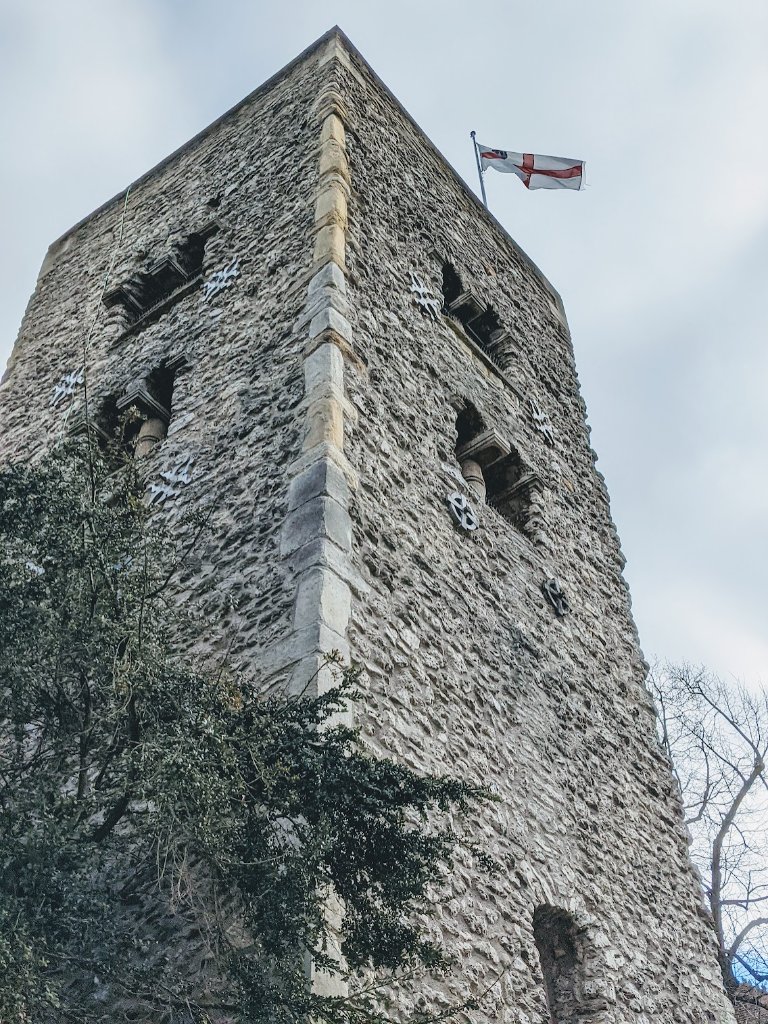
Oxford's oldest building, the Saxon tower of St Michael at the North Gate dates from around 1040 AD — predating the university by two centuries. But for Reformation pilgrims, its greatest significance lies in what it once stood beside: the Bocardo Prison, a medieval gaol built into the city's North Gate watchtower. In 1554, Archbishop Thomas Cranmer, Bishop Hugh Latimer, and Bishop Nicholas Ridley were locked here for 17 months before being led out to burn at the stake on Broad Street. Cranmer was held the longest, and from the prison he was forced to watch Latimer and Ridley die in the flames below. The prison itself was demolished in 1771, but the original door to the martyrs' cell survives — and you can see it today as you climb the 97 steps of the Saxon tower. You pass through the very doorway the bishops passed through on their way to execution. Along the way, you'll also see a set of 16th–17th century church bells and an original clockwork mechanism before emerging onto the roof with panoramic views of Oxford.
University Church of St Mary the Virgin
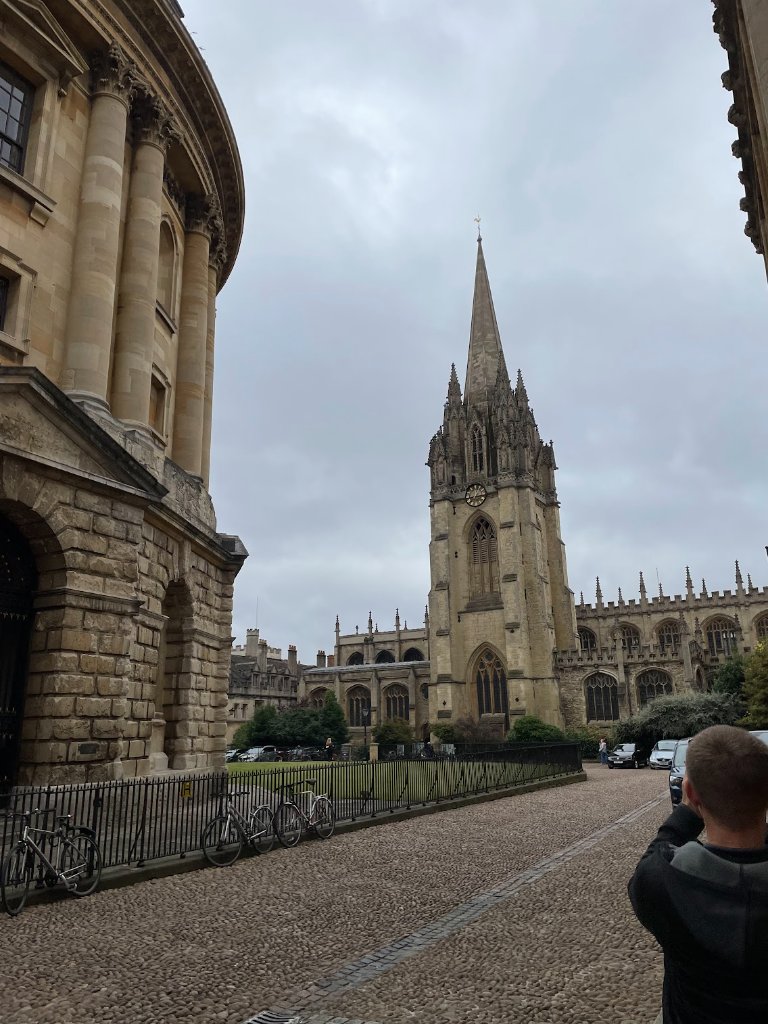
The University Church of St Mary the Virgin, standing on the High Street directly facing the Radcliffe Camera, has been the spiritual heart of the University of Oxford for over 700 years. This is where the three Oxford Martyrs were tried for heresy in 1554–1556 — the dramatic theological disputations that sealed their fate took place in a church packed with spectators. It was also here that Cranmer made his extraordinary final stand, revoking his forced recantations before being dragged out to be burned. Centuries later, the same pulpit was occupied by John Henry Newman, leader of the Oxford Movement, whose sermons from 1828 to 1843 transformed Anglican theology and eventually led him to Rome. John Wesley also preached here in 1744. The church's role as a crucible for the most consequential moments in English Christianity makes it arguably the most historically significant church building in Oxford.
Christ Church College & Cathedral
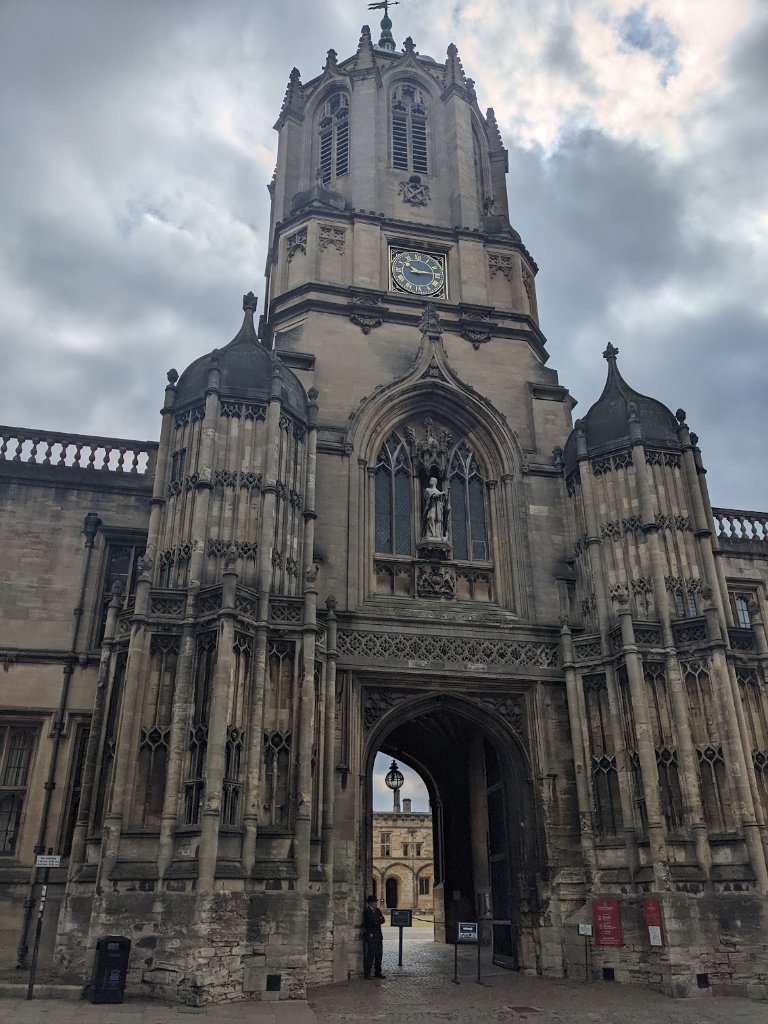
Christ Church is Oxford's grandest college, unique in that its chapel is also Oxford's cathedral — the smallest cathedral in England. Founded by Cardinal Wolsey in 1525 and refounded by Henry VIII in 1546, it is a crossroads of Reformation history. John Owen, the greatest Puritan theologian, served as Dean of Christ Church from 1651 to 1660 under Oliver Cromwell, transforming it into a center of Puritan scholarship. John and Charles Wesley were students here in the 1720s, and it was at Christ Church that the 'Holy Club' first gathered — the small group of methodical Bible study and prayer that gave rise to the Methodist movement. George Whitefield, the great evangelist of the Great Awakening, was also drawn into this circle while serving as a servitor at nearby Pembroke College. The cathedral contains extraordinary medieval stained glass, including a window depicting the murder of Thomas Becket that survived the Reformation only because one panel was removed and hidden.
Bodleian Library
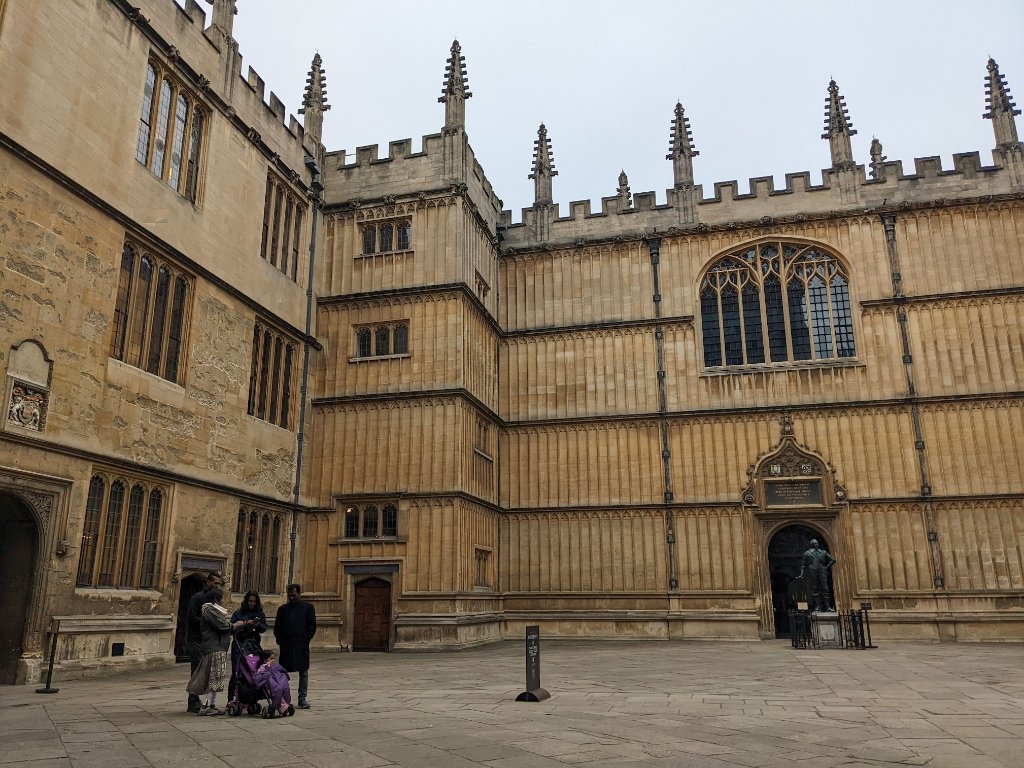
The Bodleian Library, one of the oldest and most important libraries in Europe, holds an extraordinary collection of Reformation-era manuscripts, Bibles, and theological texts. Refounded in 1602 by Sir Thomas Bodley (who was himself raised Protestant and educated in Geneva during Mary I's reign), the library includes the magnificent Duke Humfrey's Library — the original medieval reading room with its painted ceiling and chained books. The Bodleian holds early copies of Wycliffe's Bible, Tyndale's New Testament, and first editions of the King James Bible, as well as the letters and papers of key Reformation figures. As a copyright deposit library, it has received a copy of every book published in England since 1610 — making it an unbroken record of English theological thought from the Reformation to the present day.
Divinity School
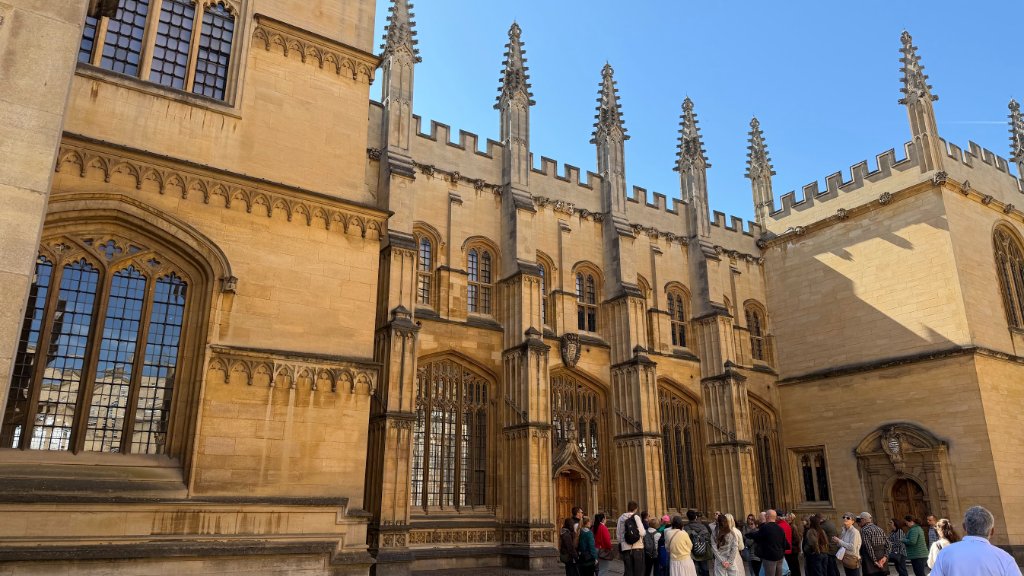
The Divinity School is the oldest purpose-built teaching room in the university, and its breathtaking vaulted ceiling — a masterpiece of English Perpendicular Gothic — has witnessed some of the most pivotal moments of the English Reformation. In April 1554, Thomas Cranmer, Hugh Latimer, and Nicholas Ridley were brought here for theological disputations that were, in reality, show trials. The three bishops were forced to defend their Protestant beliefs against teams of Catholic theologians before packed audiences. The outcome was predetermined — all three were condemned for heresy. The room's stunning lierne vault, with its elaborate carved bosses, would have been one of the last great architectural works the martyrs saw in their final months of freedom. Today the Divinity School stands as part of the Bodleian Libraries complex and is also famous as a Harry Potter filming location (the Hogwarts infirmary).

Lincoln College — Wesley Room
Lincoln College is where John Wesley was elected Fellow in 1726, a position he held until 1751. The college preserves the actual room where Wesley studied, prayed, and met with members of the Holy Club — the small band of Oxford students whose disciplined approach to faith earned them the mocking nickname 'Methodists.' Wesley's time at Lincoln was formative: he was ordained deacon in 1725 and priest in 1728, and it was during these Oxford years that he developed the systematic spiritual disciplines — daily prayer, fasting, Bible study, and works of charity — that would become the hallmarks of Methodism. The Wesley Room, on the first floor of the college's Chapel Quad, has been preserved as a memorial and contains period furnishings and Wesley memorabilia. John's brother Charles was a student at Christ Church, and together they drew other students into their intense spiritual fellowship.

Exeter College
Exeter College, founded in 1314, has a specific connection to the Wesley story: Samuel Wesley, father of John and Charles Wesley, studied here in the 1680s before becoming the rector of Epworth in Lincolnshire — the home where John and Charles grew up. The Wesley brothers' extraordinary spiritual intensity can be traced in part to the deeply devout household that Samuel and his wife Susanna created, and Samuel's Oxford education shaped the intellectual and theological foundations of that household. Exeter's Victorian chapel, designed by Sir George Gilbert Scott, contains stunning Pre-Raphaelite stained glass and tapestry by William Morris and Edward Burne-Jones — Exeter was Morris's college. The chapel is one of the most beautiful in Oxford.
Balliol College
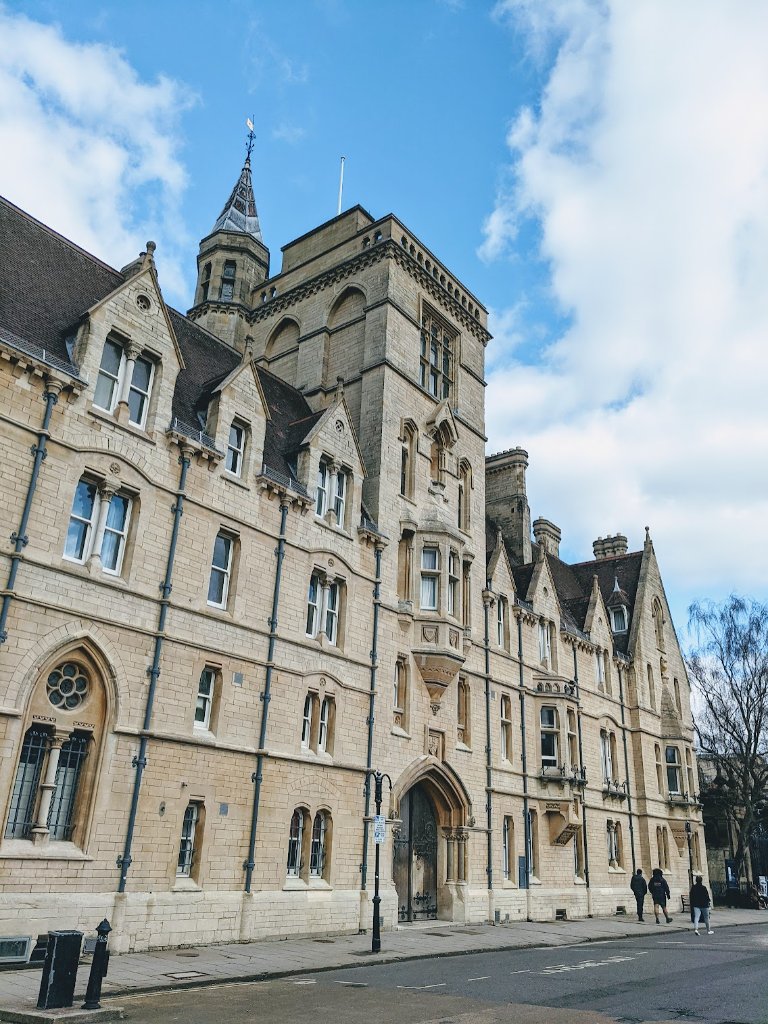
Balliol College, one of Oxford's oldest colleges (founded c. 1263), is where John Wycliffe served as Master around 1360. Wycliffe — known as the 'Morning Star of the Reformation' — used his position at Balliol to develop and propagate the ideas that would shake the foundations of medieval Christendom: that the Bible should be available in the common tongue, that the papacy had no scriptural basis for its temporal power, and that the doctrine of transubstantiation was not supported by Scripture. His followers, the Lollards, spread these ideas across England, and his writings directly influenced Jan Hus in Bohemia, whose execution in 1415 prefigured the Protestant Reformation by a century. The front of Balliol on Broad Street directly faces the cobblestone cross marking where the Oxford Martyrs were burned — men who stood in the reforming tradition that Wycliffe had launched from within these very walls 200 years earlier.
Magdalen College
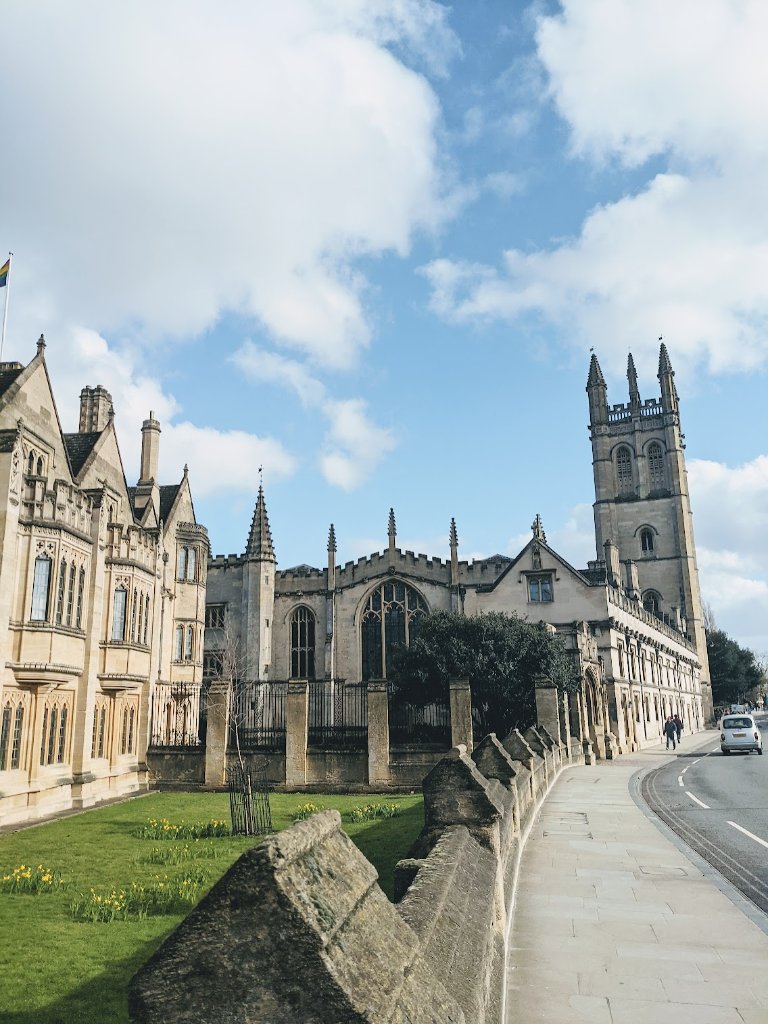
Magdalen College, with its iconic tower rising above the River Cherwell and its deer park, is one of Oxford's most beautiful and historically rich colleges. But Magdalen's greatest contribution to evangelical Christianity may be C.S. Lewis, who was a Fellow and tutor here from 1925 to 1954. It was in his rooms in the New Building that Lewis, in 1929, reluctantly came to believe in God — kneeling and praying as, in his own words, 'the most dejected and reluctant convert in all England.' Two years later, in September 1931, Lewis was walking along Addison's Walk in the college grounds with J.R.R. Tolkien and Hugo Dyson when a conversation about myth and truth brought him to full Christian faith. The Inklings — Lewis, Tolkien, Charles Williams, and others — would later meet regularly in Lewis's rooms on Thursday evenings.

Wycliffe Hall
Wycliffe Hall, founded in 1877, is a permanent private hall of the University of Oxford and one of the most influential evangelical theological colleges in the world. Named after John Wycliffe, it was established to provide theological training rooted in Evangelical Anglicanism at a time when the Oxford Movement's Anglo-Catholic influence dominated the university's theological life. The hall has trained more serving Church of England bishops than any other institution. It stands in the tradition of Conservative, Open, and Charismatic Evangelicalism and remains a vibrant center of Reformed and evangelical scholarship within the university. Its location on Banbury Road places it near the University Parks — a pleasant walk that takes you past some of Oxford's finest Victorian architecture.

Corpus Christi College
Corpus Christi College, founded in 1517 by Bishop Richard Fox, was revolutionary for its time — it was the first Oxford college designed around the humanist 'new learning,' with dedicated lectureships in Greek and Latin that laid the intellectual groundwork for the Reformation in England. The college's emphasis on studying original texts in their original languages — ad fontes ('to the sources') — was exactly the scholarly method that would later be applied to the Bible, undermining the authority of the Latin Vulgate and opening the door to vernacular translations. John Jewel, who became Bishop of Salisbury and wrote the foundational 'Apology of the Church of England' defending the Elizabethan Settlement, was a Fellow here. The college's small, intimate front quadrangle — one of the most beautiful in Oxford — centers on a famous pelican sundial, the college symbol representing Christ's self-sacrifice.

Oriel College
Oriel College is the birthplace of the Oxford Movement — the most influential theological movement in 19th-century Anglicanism. It was in the Oriel Common Room that John Henry Newman, Edward Pusey, John Keble, and Richard Hurrell Froude formed the intellectual circle that launched the Tractarian movement in 1833, producing the famous 'Tracts for the Times' that argued for the Catholic identity of the Church of England. Newman was an Oriel Fellow from 1822 and became the movement's charismatic leader, his sermons at the University Church drawing enormous crowds. The movement's central claim — that the Church of England was not a Protestant church but a branch of the Catholic Church, preserving apostolic succession and sacramental theology — sent shockwaves through Victorian Christianity. Newman's eventual conversion to Roman Catholicism in 1845 was one of the great religious earthquakes of the 19th century.

Keble College
Keble College was founded in 1870 as a memorial to John Keble, the Anglican priest and poet whose 1833 Assize Sermon is considered the founding moment of the Oxford Movement. Designed by William Butterfield in a striking polychromatic Gothic style using red, cream, and blue brick, Keble was deliberately different from Oxford's honey-stone colleges — a bold architectural statement that the Oxford Movement's legacy would be impossible to ignore. The college chapel is one of the largest in Oxford and houses Holman Hunt's famous painting 'The Light of the World' in a specially built side chapel. The painting, depicting Christ knocking at a door with no external handle (representing the human heart), has become one of the most reproduced religious images in the world. Keble was designed to provide affordable education for men of modest means who wished to live according to Church of England principles.

Pusey House
Pusey House was founded in 1884 as a memorial to Edward Bouverie Pusey, Regius Professor of Hebrew at Oxford and one of the three principal leaders of the Oxford Movement. While Newman eventually left for Rome, Pusey remained firmly within the Church of England, becoming the movement's anchor after Newman's departure. Pusey House was established to continue his vision: a center of Anglo-Catholic worship, scholarship, and pastoral care within the university. The Chapel of the Resurrection, designed by Temple Moore and furnished by Sir Ninian Comper, is a jewel of Anglo-Catholic liturgical art. Daily Eucharist has been celebrated here for eleven months of the year since the chapel's consecration, and the Sunday High Mass, celebrated according to the 1662 Book of Common Prayer in the Anglo-Catholic tradition, is one of Oxford's finest liturgical experiences.

St Giles' Church
St Giles' Church, standing at the northern end of St Giles' where the Woodstock and Banbury Roads diverge, is a beautiful 12th-century parish church that witnessed the full sweep of the English Reformation firsthand. Originally a Norman foundation, the church experienced the Dissolution of the Monasteries under Henry VIII, the iconoclasm of the Puritans during the Civil War, and the successive waves of theological change that reshaped English Christianity. Its setting, slightly apart from the dense city center, gives it a peaceful, rural quality despite being just minutes from the Martyrs' Memorial. The church continues as an active parish and is notable for its warm, inclusive community and regular program of events and concerts.

New College
New College, despite its name one of Oxford's older foundations (established 1379 by William of Wykeham, Bishop of Winchester), has a chapel that powerfully illustrates the impact of the Reformation. The great west window, originally filled with medieval stained glass, was replaced in 1778 with a design by Sir Joshua Reynolds — a reminder that much of England's medieval religious art was destroyed or altered during and after the Reformation. The chapel also contains a striking sculpture of Lazarus by Jacob Epstein and the famous misericords — medieval carved choir stall seats — that survived the iconoclastic periods intact. The college's magnificent cloisters and gardens, built against the surviving stretch of the medieval city wall, make it one of Oxford's most atmospheric colleges.
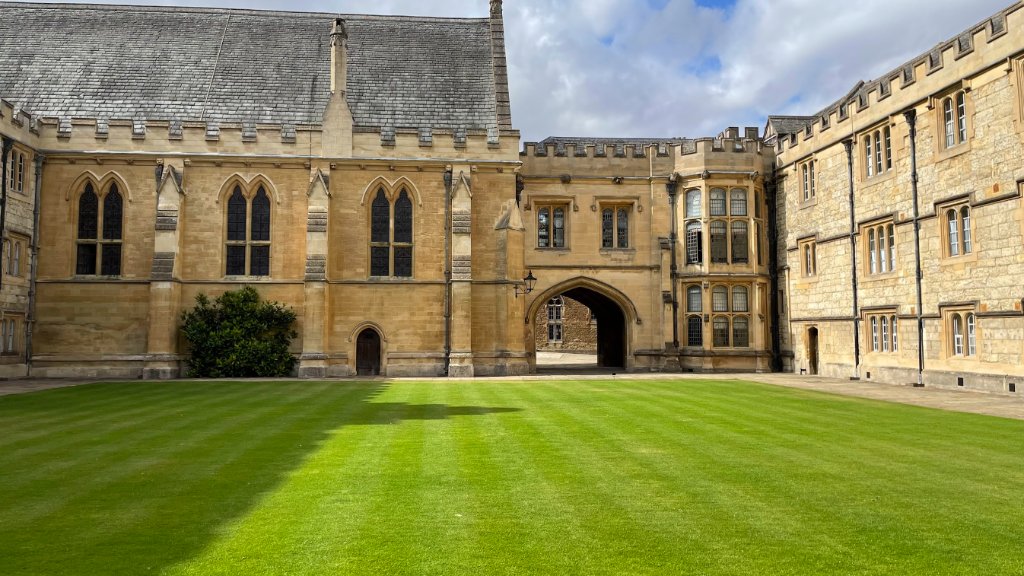
Merton College
Merton College, one of Oxford's three oldest colleges (founded 1264), played a direct role in pre-Reformation history: John Wycliffe held a fellowship here in 1356, during the period when he was developing the ideas that would earn him the title 'Morning Star of the Reformation.' The college chapel is one of Oxford's finest medieval buildings, with stained glass dating from the 1290s — among the oldest in Oxford. The chapel also contains a brass lectern from 1504, a beautiful surviving example of pre-Reformation church furnishing. Merton's Mob Quad, dating from the 1370s, is the oldest quadrangle in Oxford and gives a powerful sense of the medieval academic world that shaped Wycliffe and his contemporaries.

Wesley Memorial Church
Wesley Memorial Church is the principal Methodist church in Oxford, built in 1878 to honor John and Charles Wesley's deep connection to the city. The congregation was originally founded in 1783, and the present Victorian Gothic building occupies a prominent position on New Inn Hall Street in the heart of the city. The church stands as a living memorial to the Wesley brothers' legacy — the movement that began with a small group of earnest students at Christ Church and Lincoln College grew into a worldwide communion of over 80 million Methodists. The church maintains an active worshipping community and hosts regular concerts, lectures, and community events. Inside, memorials and artwork celebrate the Wesley heritage, connecting the 18th-century revival with the ongoing life of the Methodist tradition in the very city where it began.

North Gate Hall (OICCU)
North Gate Hall, a modest building on St Michael's Street opposite the Oxford Union, has a significance to 20th-century evangelical Christianity that far outweighs its unassuming appearance. Built in 1871 as a United Methodist Free Church chapel, the building was purchased in 1933 by Montague Goodman and given to the Oxford Inter-Collegiate Christian Union (OICCU) in 1948. For decades, North Gate Hall was the home of OICCU — one of the world's oldest and most influential university Christian organizations (founded 1879) — and its basement prayer meetings, weekly Bible talks, and evangelistic events shaped generations of evangelical leaders. Packed with students coming to hear Bible teaching from the likes of Martyn Lloyd-Jones and John Stott, the building was a launching point for whole careers of gospel ministry. But the hall's most famous moment happened quietly, in the basement, when a young J.I. Packer — serving as OICCU's junior librarian — discovered a dusty, uncut set of John Owen's 24-volume collected works among uncatalogued books donated by an elderly clergyman. That discovery transformed Packer's theology, catalyzed the 20th-century Puritan revival, and through Packer's influence, reshaped evangelical Christianity worldwide.

Hertford College — Tyndale Connection
Hertford College occupies the site of the former Magdalen Hall, where William Tyndale — the father of the English Bible — studied from 1506 to 1515, earning his BA (1512) and MA (1515). Tyndale's time at Oxford immersed him in the 'new learning' of Renaissance humanism, training him in the Greek and Hebrew that would enable his revolutionary translation of the Bible into English. Tyndale's translation was the first to work directly from the original Greek and Hebrew texts, the first to be printed, and its language was so powerful that approximately 90% of the King James Bible's New Testament is pure Tyndale. He was executed for heresy in 1536 in Belgium, strangled and burned at the stake. His dying words — 'Lord, open the King of England's eyes!' — were prophetic: within four years, Henry VIII authorized the Great Bible to be placed in every English parish church, using Tyndale's translations as its foundation. The college today is famous for the Bridge of Sighs, the picturesque covered bridge connecting its buildings over New College Lane, but its deeper significance lies in the scholar who once studied within these walls and gave the English-speaking world its Bible.

Pembroke College — Whitefield's Oxford
Pembroke College, directly across St Aldate's from Christ Church, is where George Whitefield — the most electrifying preacher of the 18th-century evangelical revival — was formed as a Christian. Whitefield arrived in 1732 as a servitor, the lowest rank of undergraduate: too poor to pay his own way, he cleaned rooms, carried books, and served wealthier students in exchange for free tuition. Despite his humble status, Whitefield was drawn to the Wesley brothers' 'Holy Club' at Christ Church across the road, and in the winter of 1735 he was finally admitted to their circle. It was during his time at Pembroke that Charles Wesley put into Whitefield's hands a copy of Henry Scougal's 'The Life of God in the Soul of Man.' That book transformed him — Whitefield later said it showed him that true religion was not outward observance but an inward reality, and it led directly to his evangelical conversion. He experienced what he described as 'a full assurance of faith' in 1735, becoming the first of the Oxford Methodists to undergo a dramatic conversion experience. Ordained as a deacon after graduating with his BA in 1736, Whitefield went on to preach to crowds of tens of thousands across Britain and America, becoming the defining voice of the Great Awakening. Unlike the Wesleys, Whitefield embraced Calvinism, and his open-air preaching to massive crowds pioneered a style of evangelism that shaped Protestant Christianity for centuries. It all began here, in the rooms of a poor servitor at Pembroke.

Mansfield College — The Nonconformist Heritage
Mansfield College is the only Oxford college founded specifically to honor the Nonconformist and Puritan tradition — and its chapel is a shrine to the dissenting heritage that was excluded from Oxford for centuries. Established in Birmingham in 1838 as a training college for Nonconformist ministers, it moved to Oxford in 1886 after the religious tests that had barred dissenters from the university were finally abolished. The unconsecrated chapel contains extraordinary stained glass windows depicting leading figures from Nonconformist history, including Oliver Cromwell shown in the robes of the Chancellor of Oxford University — flanked by Sir Henry Vane and John Hampden. Portraits of the 1662 Dissenters — the nearly 2,000 ministers ejected from their livings for refusing to conform to the Act of Uniformity (including John Owen) — hang in the library and corridors. A portrait of Cromwell presides over the Senior Common Room. Mansfield is a living reminder that the Puritan tradition, once forcibly expelled from Oxford, eventually returned and claimed its place.

The Eagle and Child — The Inklings' Pub
The Eagle and Child — affectionately known as 'the Bird and Baby' — is one of the most famous literary pubs in the world. From 1933 to 1962, a group of Oxford writers and scholars called the Inklings met here every Monday or Tuesday lunchtime in a private back room known as the 'Rabbit Room.' The group's core members were C.S. Lewis and J.R.R. Tolkien, joined by Charles Williams, Hugo Dyson, Owen Barfield, and others. It was in this room that early drafts of 'The Lord of the Rings' and 'The Chronicles of Narnia' were read aloud and critiqued. In June 1950, Lewis distributed the proofs of 'The Lion, the Witch and the Wardrobe' to the group here. The Inklings represented a remarkable convergence of literary genius, deep friendship, and serious Christian conviction. Lewis (an Anglican convert from atheism) and Tolkien (a devout Roman Catholic) shared a profound belief that myth, story, and imagination were paths to truth — and their mutual influence produced two of the 20th century's greatest bodies of Christian-infused literature. When the pub was modernized in 1962 and the Rabbit Room lost its privacy, the group reluctantly moved across the street to the Lamb and Flag — but the meetings ended after Lewis's death in November 1963.
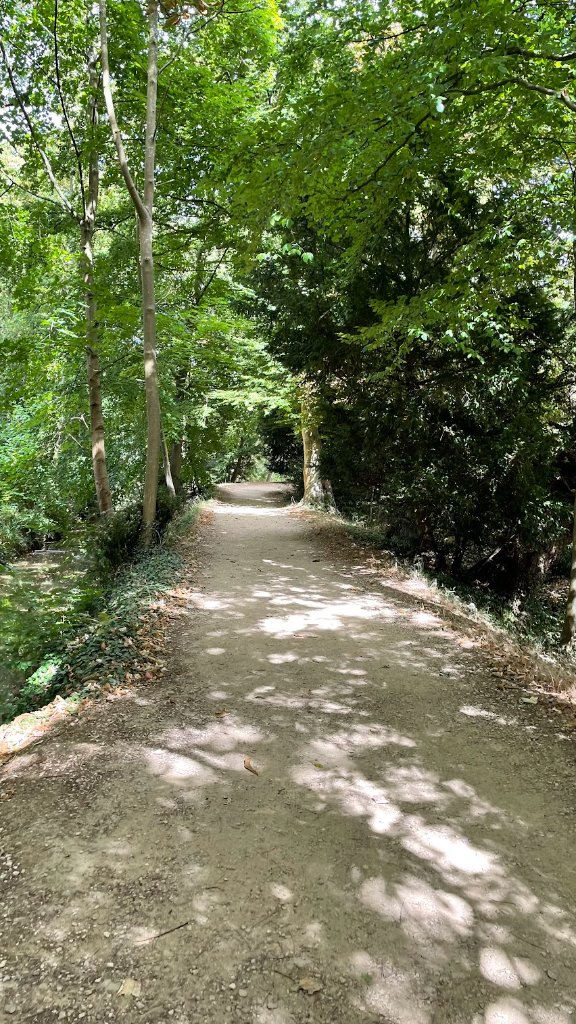
Addison's Walk (C.S. Lewis Conversion Site)
This tree-lined circular path along the River Cherwell within Magdalen College grounds is where one of the most consequential conversations in modern Christian history took place. On the evening of 19 September 1931, C.S. Lewis walked here with J.R.R. Tolkien and Hugo Dyson, discussing myth, truth, and the meaning of Christ's sacrifice. That conversation — and the windswept evening walk — led directly to Lewis's conversion to Christianity twelve days later.
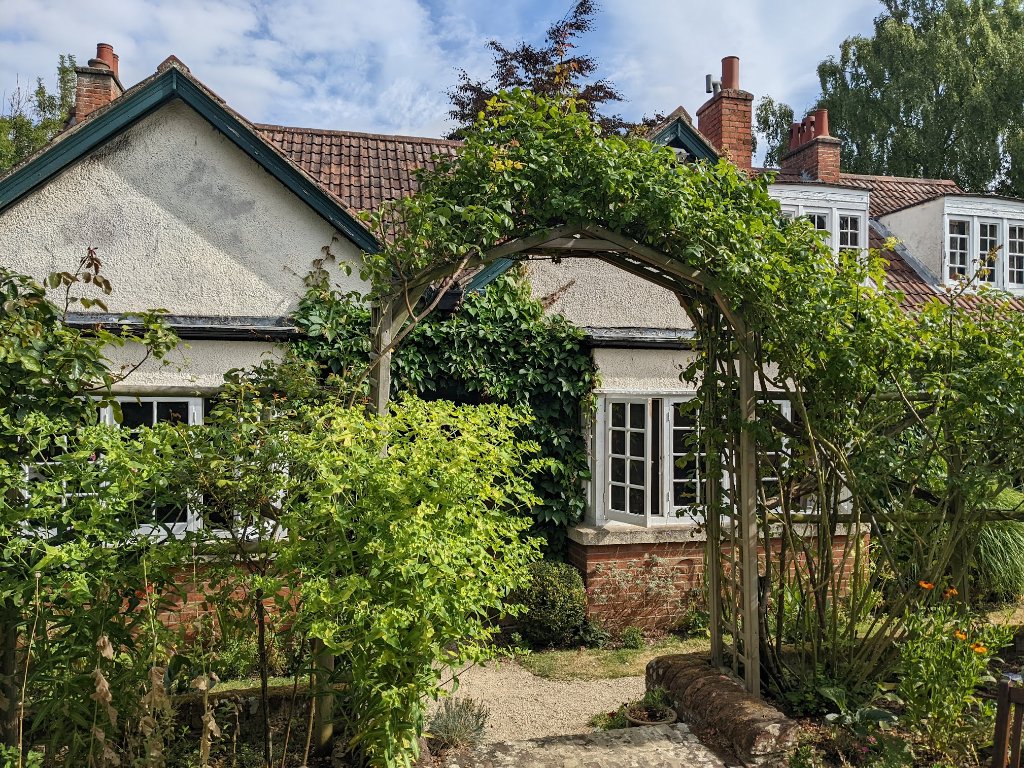
The Kilns — C.S. Lewis's Home
The Kilns, a modest brick house in Headington on the eastern edge of Oxford, was C.S. Lewis's home from 1930 until his death on 22 November 1963. Named after two brick kilns in its grounds, the house and its surrounding woodland and lake were bought by Lewis and his brother Warren ('Warnie') and became the backdrop to some of the most important Christian writing of the 20th century. Lewis wrote most of his major works here — including 'The Screwtape Letters,' 'Mere Christianity,' 'The Problem of Pain,' the Narnia books, and his late masterpiece 'A Grief Observed,' written after the death of his wife Joy Davidman. The house is now maintained by the C.S. Lewis Foundation as a study center and is available for tours by appointment. The grounds, including the lake and woodland that inspired scenes in the Narnia books, can be visited at any time. Lewis is buried in the churchyard of Holy Trinity Church, Headington Quarry, just a short walk away — his grave, shared with his brother Warnie, is marked with a simple stone slab inscribed with a quote from Shakespeare.

